How many of you enjoy shopping? Shopping is done all over the world. Did you ever wonder how the scanner knew what item was being scanned? Ever wonder why when apples get scated it reads it as apples and not potatos? Barcodes play a big roll in the world today. Barcodes are a machine-readable code in the form of numbers and a pattern of parallel lines of varying widths printed on and identifying a product. Barcodes are incedibly unique and critical to almost everything in the world today.
There are many different types of barcodes. Some you may be familiar with others you many not be as familiar with. We will briefly discuss a few different types of barcodes and what they are used for.
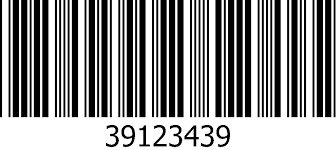
Code 39 is one of the oldest barcodes around and is a common symbology found in electronics, healthcare, and government (“Barcode Types” n.d).
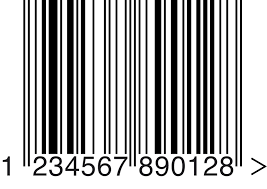
Universal Product Code also known as a UPC. This is one of the most used barcodes it can be found on most retail products (“Barcode Types” n.d)
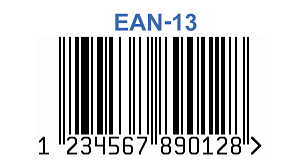
International Article Number (EAN). These can be considered a type of UPC.
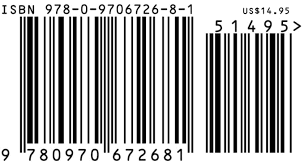
International Standard Book Numbers (ISBN) (“Barcode Types” n.d). These types of barcodes are mostly seen on books.
Quick Response Code (QR). This is one of the more recent type of barcodes. “You will find them often used on advertising materials and storefronts, linking to special promotions or details about a curtain product” (“Barcode Types” n.d).
We will be covering the math behind ISBN and UPC barcodes.
The History
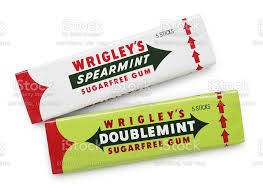
"For more then four decades barcodes have helped companies, large and sall, more efficiently and accurately identify, track and inventory a variety of products, assests, supplies, and more" (The History of Barcodes, 2016). Barcodes did not make a showing unitl the 1970's, but the idea of a barcode has been around many years before that. In the 1940’s, Norman Joseph Woodland and Bernard Silver began conducting research. With their knowledge of morse code and sound waves and the bull’s eye barcode system in 1952, they created the first barcode reader (The History of Barcodes, 2016). The very first barcode to be used commercially was in 1966, with this came a few complications, one of which was having an industry standard, this would later be created in the early 1970’s. “In 1974 at a Marsh supermarket in Troy, Ohio, a pack of Wrigley’s chewing gun is the first retail product sold using a barcode scanner” (The History of Barcodes, 2016).
After this time slowly more and more grocery stores started using barcode scanners. In the 1990’s there were QR codes created for cars to help track the vehicles themselves and different parts of cars (The History of Barcodes, 2016). In the early 2000’s almost 90% of the top 500 companies in the united states started to adapt and use barcodes (The History of Barcodes, 2016). This leads us up to where we are today. The world we live in could not function without barcodes. They are used everywhere and for everything. The way stores track their products is though barcodes. The way they add new products or take products off is with barcodes. Barcodes are used in the tracking of packages, from when you order, right up to the point of drop off on your porch.
The Math Behind Barcodes
This is where it gets fun! Let us first look at the math behind ISBN-13.
Let us now look at the math behind an UCP-12.
Watching these videos does a lot better way of explaining the math being these two types of barcodes then if it was to be written out. When watching the two videos it is
important to understand the difference between the two. Although the ISBN and UCP are very similar in their calculations, they do have differences. It is expreamly emportant that you
understand this and are able to tell the difference and distingish between the different types of barcodes. With that knowing what calculations go with what barcode.
Applications
Here are two applets in which I made in GeoGebra that help simulate ISBN and UCP.
The first one is an applet for ISBN barcodes
These applets work very similar to eachother. There are sliders on the side that color cordnate to a number. You slide the slider to the
correct number correstponding to the desired number. You continure to do this until you have the barcode numbers you want. Wants you have
all the numbers in place there are two check boxes. The first one will show you the correct calculation. The second one will show you the correct
check digit. This allows you to check you math and understanding of the math behind barcodes.
The second one here is an applet for UPC-12 barcodes
As you have probably realized while reading this, barcodes are everywhere. Barcodes have become an essential part of businesses within the last 20 years.
“Barcodes provide a method to track and store information about goods, from individual items to large stocks of thousands or even millions
of items” (10 Reasons, 2020). I have worked firsthand, and very closely to barcodes for the past year.
I spend the summer working at Amazon. This was a cool experience I had working firsthand with barcodes. The amazon facility uses barcodes for everything.
They track everything with their barcodes from the incoming products to the products being shipped and even the employees.
Everything gets scanned. You scan a product when it gets into the building. You scan a produced when it gets stowed.
You scan it when it gets picked. You can it when it gets packaged. And you scan it all the way up to when it gets delivered.
Barcodes make amazon work. Without barcodes I do not think amazon would function the way it is able to today.
Within amazon I was introduced to the different types of barcodes. I did not quite understand the difference before, but after my semester of research
I was able to understand and identify the difference between the different barcodes. Looking back, I can see how these different barcodes
played a big role in the amazon warehouse. The major barcodes used were the UCP’s and the IQ codes. The UPC’s is how we tracked everything,
and the IQ codes are what lead the robot pods on the floor. My main take away from my semester project is that barcodes are a major asset to the world,
and I believe that it will just keep growing. Soon Everything everywhere will run off barcodes. It is a way to store all information within a single code.
And from this project I now know how barcodes work. When an error occurs, it is most likely a problem in the mathematics of that barcode.
Reference
10 Reasons to Use Barcodes: The Label Experts. (2020, June 19). Retrieved October 24, 2020, from https://barcode-labels.com/10-reasons-use-barcodes/
Barcode Types - Different Kinds Explained: The Label Experts. (n.d.). Retrieved October 24, 2020, from https://barcode-labels.com/getting-started/barcodes/types/
FutureLearn. (n.d.). What are Barcodes? - Maths Puzzles. Retrieved October 24, 2020, from https://www.futurelearn.com/courses/maths-puzzles/0/steps/14004
Gardner, R. (2011, February 15). ISBN 10, ISBN 13, and Those Pesky X's. Retrieved October 24, 2020, from https://rachellegardner.com/isbn-10-isbn-13-and-those-pesky-x%E2%80%99s/
History of Barcodes – Barcodes Inc. (2020, August 05). Retrieved October 24, 2020, from https://www.barcodesinc.com/articles/history.htm
How is the UPC-A check digit calculated? (2020, August 20). Retrieved October 24, 2020, from https://honeywellaidc.force.com/supportppr/s/article/How-is-the-UPC-A-check-digit-calculated
Majithia, J. (2020, July 10). Glimpse on Mathematics behind Barcode Numbers Like ISBN and UPC. Retrieved October 24, 2020, from https://www.bing.com/videos/search?q=math+and+barcodes
Pearce, B. (2015, March 16). ISBN Information. Retrieved October 24, 2020, from https://isbn-information.com/the-10-digit-isbn.html
The History of Barcodes. (2016, August 30). Retrieved October 24, 2020, from https://www.barcoding.com/resources/barcoding-basics/the-history-of-barcodes/